OPERATIONAL DOSSIER • DIVISION 02
Grassroots Audio Production & Acoustic Archiving
Our non-profit sound workshop provides amateur musical ensembles, acoustic performers, and oral historians with free recording facilities, audio mastering, and civic audio archiving across Angoulême.

Division Mandate
Democratizing High-Fidelity Acoustic Capture
Commercial recording studios charge hundreds of euros per hour, making professional multi-track recording inaccessible to grassroots amateur musicians, youth choir collectives, acoustic duets, and local poets. This economic threshold deprives the cultural commons of authentic local voices.
Division 2 of LA VOIX DU SINGE ASSOCIATION—Le Pôle d'Enregistrement Sonore & Patrimoine Oral—operates as a public-benefit recording space. We provide amateur musicians, acoustic storytellers, and regional researchers with free access to high-fidelity audio equipment, sound baffles, and experienced volunteer sound engineers.
Our recording philosophy prioritizes organic, acoustic fidelity over artificial pitch-correction or sterile commercial processing. We capture the genuine acoustic resonance of instruments and vocal dynamics in an encouraging, unhurried community environment.
Studio Workflow
Our 5-Stage Audio Production & Archiving Process
Every audio project undertaken by Division 2 follows a transparent, collaborative pathway designed to achieve professional sonic fidelity without commercial pressure:
Stage 1
Acoustic Pre-Session Assessment
The artist or ensemble meets with our volunteer audio technician to review musical repertoire, instrument frequency ranges, dynamic peaks, and preferred room mic configurations.
Stage 2
Multi-Track Acoustic Tracking
Performances are recorded live in a treated acoustic space using matched stereo pairs and large-diaphragm condenser mics at 24-bit / 96 kHz uncompressed resolution.
Stage 3
Open-Source Audio Mixing
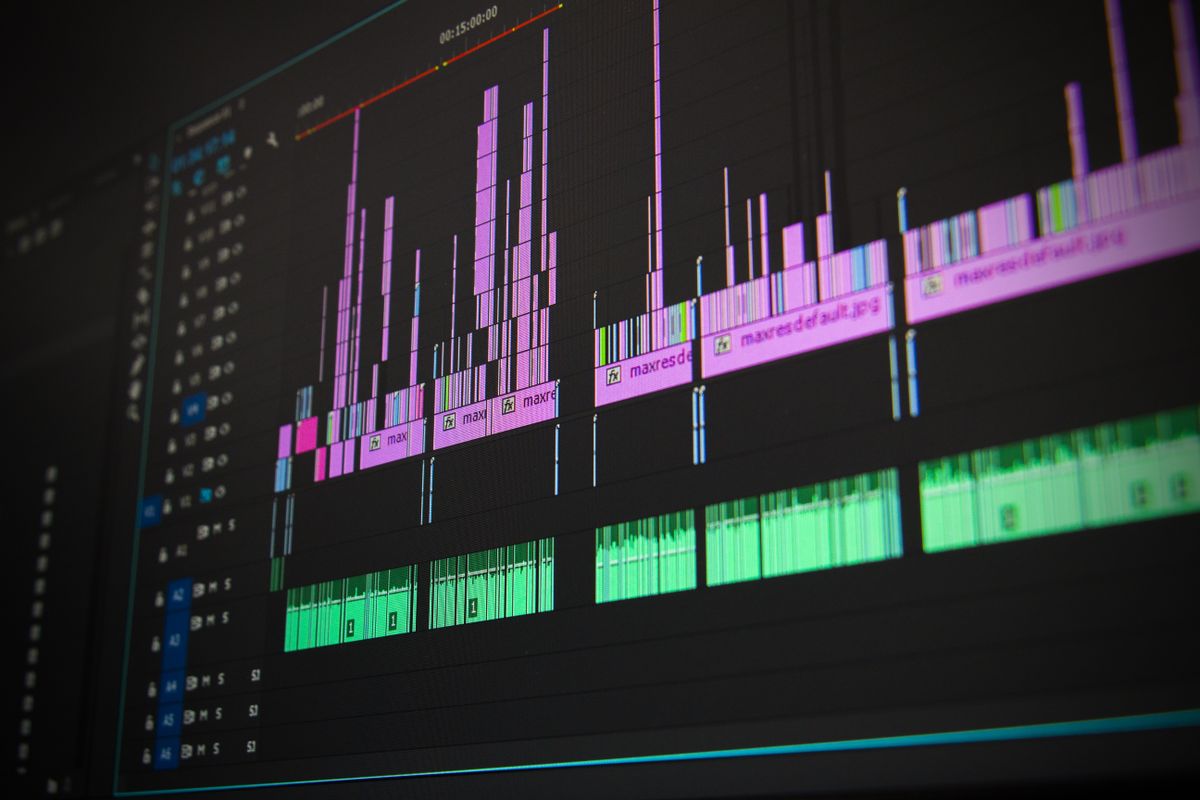
Using open-source digital audio workstations (Ardour and Audacity), our team handles equalization, surgical harmonic balancing, dynamic compression, and natural spatial reverb.
Stage 4
EBU R128 Master Finalization
Master tracks are calibrated to international broadcast standards (EBU R128 loudness target: -23 LUFS / -14 LUFS for streaming) ensuring pristine playback across all listening environments.
Stage 5
Civic Preservation & Archive Deposit
Master recordings are exported as lossless FLAC files with complete ID3/BWF metadata and deposited into our public civic archive and shared with departmental library collections.
Open Access
Zero-Cost Creator Masters
Performers receive uncompressed master audio files on physical USB drives or secure server downloads for their personal portfolio, retaining 100% ownership of their musical recordings.
Civic Memory
The Charente Oral History & Spoken-Word Archive
Beyond musical performance, Division 2 conducts an ongoing civic preservation mission: recording the spoken voices, dialects, and lived oral memories of Charente residents.
Our volunteer field recording units capture:
- Artisanal Industrial Testimonies: First-hand interviews with former papermakers, felt weavers, and river barge workers who built the industrial identity of Angoulême.
- Spoken-Word & Regional Dialect: Recordings of contemporary slam poetry, local Occitan/Saintongeais folklore recitations, and bilingual immigrant memoirs.
- School & Intergenerational Dialogues: Recorded classroom conversations where elderly residents discuss local historical transformations with primary school children.
These recordings are cataloged under Creative Commons non-commercial licenses and accessible to researchers, teachers, and curious citizens through regional library portals.

Technical Inventory
Workshop Studio Technical Equipment & Environment
Our sound facility at 4 Rue Léonce Guimberteau is equipped with professional, reliable acoustic and digital hardware maintained through associative self-financing:
Microphone Locker
Røde NT1-A matched pairs, Shure SM58/SM57 dynamic mics, AKG C214 large-diaphragm condenser, and Zoom H6 field recorder for outdoor oral history sessions.
Preamps & Converters
Focusrite Scarlett 18i20 multi-channel audio interface with ultra-low-noise preamps, providing 8 simultaneous balanced XLR inputs for acoustic live ensembles.
Acoustic Treatment
High-density rockwool broadband absorption panels, corner bass traps, reflection filters, and floating floor damping to eliminate flutter echoes and exterior traffic rumble.
Preservation Standards
Phonographic Long-Term Preservation & Lossless Standards
Sound recordings produced by LA VOIX DU SINGE ASSOCIATION are engineered for permanence. In adherence to the international guidelines of the International Association of Sound and Audiovisual Archives (IASA-TC 04):
- Open File Formats: Master tracks are stored in uncompressed Broadcast Wave Format (BWF / Linear PCM at 24-bit / 96 kHz) and mirrored in FLAC (Free Lossless Audio Codec), avoiding proprietary or lossy compression formats (such as MP3 or AAC).
- Metadata Rigor: Each recording contains embedded non-proprietary metadata adhering to Dublin Core standards, recording technical signal chains, microphone placements, artist attribution, recording date, and acoustic venue characteristics.
- Redundant Cloud & Offline Cold Storage: All master sessions are duplicated across three physically distinct locations: our local encrypted NAS at 4 Rue Léonce Guimberteau, an offline LTO-magnetic backup, and a secure European server archive.
Phonographic Catalog
Notable Community Audio Projects & Spoken Archives
Here are three notable sound archives completed by Division 2 and made freely accessible to the Charente community:
1. "Mémoires des Papeteries"
Oral History • 14 Testimonies • 4.5 Hours
Spoken testimonies of veteran Angoulême paper machine operators, detailing industrial working life, strikes, and solidarity along the Charente river during the mid-20th century.
2. "Cordes & Rives"
Acoustic Folk • 8 Tracks • 38 Minutes
Live stereo acoustic string duets recorded in the Saint-Cybard stone cloisters, featuring young amateur guitarists and cellists mentored by our volunteer audio engineers.
3. "Rimes de Charente"
Spoken Word • 12 Youth Poets • 28 Minutes
An energetic compilation of urban slam poetry created by high school students during after-school creative writing workshops in Angoulême public youth centers.
Studio Booking
Scheduling Free Studio Sessions
Studio time is allocated on a monthly basis based on artistic merit, community engagement, and civic mission alignment. Priority is given to amateur performers, student groups, and regional acoustic projects that do not have commercial representation.
To request a recording block:
- Submit a brief recording plan detailing your instrumentation and estimated track count.
- Confirm your agreement with our non-commercial charter (no commercial sales of recordings created using association equipment).
- Allow at least three weeks for our volunteer sound engineers to coordinate availability.
Hearing Health & Acoustic Safety Guarantee
All control room monitoring is capped at 85 dBA continuous sound pressure levels to protect the auditory health of our volunteers and guest musicians. High-fidelity earplugs and hearing protection accessories are provided free to all studio participants. Furthermore, our sound engineers offer free training sessions on open-source digital audio editing, empowering community musicians to master their own audio tracks independently.